

Collision avoidance systems for cranes help operators stop impacts before they happen. Think of three everyday scenes. A mobile crane swings its boom toward a spot the operator cannot see. Meanwhile, a tower crane’s jib sweeps into a neighbor’s working area. In the warehouse, a forklift reverses around a blind corner. Each scene can end in a near miss or in a costly collision.
In this guide, we explain how collision avoidance systems for cranes work and how radar, ultrasonic and laser sensors differ. We also show how the needs change across mobile cranes, tower cranes, offshore cranes and forklifts. Finally, we list what to check before you choose a system. This is not just for new machines. In many cases, you can add a system to equipment that is already in your fleet.
What Are Collision Avoidance Systems for Cranes?
A collision avoidance system is an operator assistance system. It detects the risk of contact between a machine and its surroundings. Then it warns the operator, or stops the movement, before impact. On a crane, the surroundings can mean another crane, a building or a power line. They can also mean part of a ship, a person or the load itself.
You may also see the term crane collision avoidance system, or proximity detection system. The goal is the same in every case. The system gives the operator information that is hard to see from the cab. It also reacts when time is short.
Warning, Slowdown and Stop
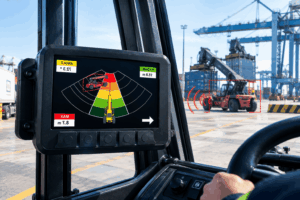
Most systems respond in stages. First, a visual and audible warning tells the operator that an obstacle is close. If the distance keeps shrinking, the system can slow the movement. As a last step, it can stop the movement before contact. This staged response keeps the operator in control. It also avoids sudden halts, which would stress the machine and swing the load.
Why Crane Collisions Happen
Collisions rarely have a single cause. Instead, several factors usually combine:
- Blind spots: the cab hides large parts of the boom, the load and the ground.
- Shared work areas: several cranes or machines operate in overlapping zones.
- Fixed obstacles: buildings, structures, power lines and, offshore, parts of the vessel.
- Human factors: fatigue, time pressure and the difficulty of judging distance in three dimensions.
Every collision, and every near miss, also brings downtime, damage and risk to people. For this reason, prevention costs far less than recovery.
How Collision Avoidance Systems for Cranes Work
Whatever the technology, the logic is always the same: detect, decide and respond. The system senses its surroundings. Then it compares what it sees with set limits, and it acts as soon as the machine crosses a limit.
The Three Building Blocks
A typical system has three parts that work in sequence:
- Sensors detect objects or measure distance. They use radar, ultrasonic or laser technology.
- The control unit compares the readings with the set distances and zones. After that, it decides which response to trigger.
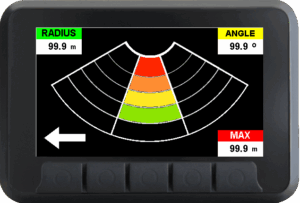
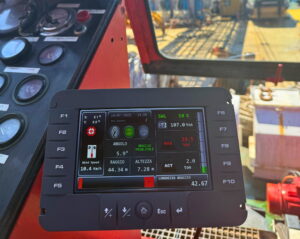
- The operator display shows visual and audible alerts. It can also show camera images. A machine output can then limit or stop the movement.
Sensor-Based and Zone-Based Protection
Sensor-based protection detects real objects in the path of the machine, including unexpected ones. Zone-based protection works differently. It uses virtual areas that you set for the site, such as exclusion zones or known obstacles. These zones need no extra hardware. In practice, the two approaches often work together. Zones cover the fixed, known parts of the site, while sensors cover the unexpected.
Crane Proximity Sensors Compared: Radar, Ultrasonic and Laser
The choice of crane proximity sensors depends on range, resolution and working conditions. Industrial inductive or capacitive switches, which are common in factory automation, work only at very short range. Therefore, they do not suit collision avoidance systems for cranes. Radar, ultrasonic and laser sensors are the three usual options.
Radar
Radar offers long range and performs well in dust, rain, fog and darkness. For this reason, it suits outdoor and marine work, and it fits well on a boom. However, it shows less detail about the shape of an object.
Ultrasonic Sensors (Sonar)
Ultrasonic sensors, also called sonar, are low in cost and effective at short range. As a result, they suit low-speed vehicles and close blind spots. On the other hand, wind, temperature changes and soft surfaces can affect their readings.
Laser
Laser sensors give high resolution and precise distance readings. Therefore, they work well in defined work areas and for accurate positioning. However, dust, fog, heavy rain and dirty lenses can reduce their performance.
Combining Technologies
No single crane proximity sensor is best everywhere. For this reason, many installations combine technologies. Your best mix depends on the machine and the site.
Collision Avoidance Systems for Cranes by Machine Type
Each machine brings its own hazards, so collision avoidance systems for cranes change too. Next, we show how the main requirements differ.
Mobile Crane Collision Avoidance
Mobile cranes and telehandlers move between sites and set up in different layouts. They often work close to buildings, power lines and people. Therefore, mobile crane collision avoidance focuses on obstacles along the boom path and in the operator’s blind spots. The aim is to warn the operator early, so a hard stop is rarely needed. For a wider view of this machine type, read our guide to mobile cranes.
Tower Crane Collision Avoidance and EN 17076
On construction sites with several tower cranes, tower crane collision avoidance mainly addresses interference between overlapping working areas. Contact with fixed obstacles and entry into exclusion zones are two further concerns. In Europe, EN 17076 sets safety requirements for collision avoidance systems on tower cranes. It also covers working range limiters. The standard applies to tower cranes only, so it is not the reference for mobile cranes or forklifts. For more on cranes used on building sites, see our guide to construction cranes.
Offshore and Marine Crane Collision Avoidance
On ships, platforms and in ports, cranes work close to vessel structures, other equipment and moving loads. In addition, every technical trip is costly, so reliability matters even more. Offshore crane collision avoidance often combines configurable zones with sensors mounted on the boom. The zones cover the fixed parts of the installation. The boom sensors cover what changes.
Forklift Collision Avoidance in Warehouses and Yards
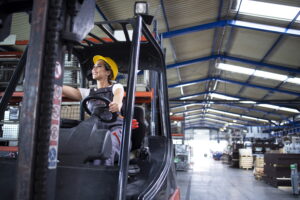
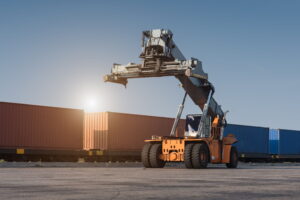
In warehouses and yards, forklift collision avoidance mainly protects pedestrians, racking and other trucks. The risk is highest at low speed, around blind corners and when reversing. Short-range radar or ultrasonic sensors warn the driver. Where needed, they can also limit speed or stop the vehicle.
How to Choose Collision Avoidance Systems for Cranes
When you compare collision avoidance systems for cranes, start with the machine and the site, not with the sensor. Work through these steps in order:
- Define the machine and its use. Note the crane type and the boom geometry. Also note whether it works at sea, on a construction site or in a warehouse.
- Set the detection range and resolution. Decide how far ahead the system must see, and how small an object it must detect.
- Check the environment. Dust, rain, fog, salt, vibration and temperature all affect sensor performance.
- Choose the response logic. Decide whether you need a warning only, or a slowdown and a stop as well. Also decide how the operator stays in control.
- Review the operator display. Alerts should be clear at a glance, and camera support helps where visibility is poor.
- Check retrofit options. Confirm that the system works with the onboard electronics, including any load limiter. Also confirm that you can fit it to existing machines. Our guides to LMI systems for cranes and machinery retrofit cover both topics.
- Confirm start-up and service. Zone setup and technical support matter as much as the hardware.
A crane collision avoidance system that fits the machine produces fewer false alarms, and operators learn to trust it. A system that alarms too often gets ignored. That is the quickest way to lose the protection you wanted.
Collision Avoidance Systems for Cranes and Telemetry
Collision avoidance systems for cranes protect the machine in the moment. Telemetry, on the other hand, shows what happens over time. If a system logs alerts and near-miss events on a central platform, fleet managers can see where close calls occur, and how often. As a result, they can adjust site layout, training or machine settings. We describe the same data-driven approach in our guide to heavy equipment telematics.
Collision Avoidance Systems for Cranes from 3Bmust
3Bmust develops collision avoidance systems for cranes and wheeled vehicles. We match the sensor to the job (sonar, radar or laser) and set range and resolution to what each machine needs. The operator gets visual and audible alerts, and the display can add camera images. At sea, configurable virtual zones need no extra hardware, while boom-mounted sensors cover the rest.
Not sure which setup fits your crane? Our technical team can review your machine and site with you. Explore our 3Bmust anti-collision devices or contact us directly.
FAQ: Collision Avoidance Systems for Cranes
What is the anti-collision system in a crane?
It is a system that detects obstacles around the crane. Then it warns the operator or stops the movement before impact. It combines sensors, a control unit and an operator display. It is also known as a collision avoidance system.
How do collision avoidance systems for cranes work?
Sensors detect objects or measure distance. A control unit compares the readings with the set limits and zones. Then the system responds with a warning, a slowdown or a stop. Some systems also use virtual zones to protect fixed obstacles.
Which sensor works best in collision avoidance systems for cranes?
It depends on the use. Radar suits long range and harsh outdoor conditions. Ultrasonic sensors suit short range at low cost. Laser offers high precision in defined areas. Many systems combine them.
Can collision avoidance systems for cranes be installed on an existing crane?
In many cases, yes. However, the answer depends on the machine, its electronics and the type of protection you need. For this reason, a technician should assess the machine before installation.
What is EN 17076?
EN 17076 is the European safety standard for collision avoidance systems on tower cranes. It also sets requirements for working range limiters. It applies to tower cranes only. Therefore, it is not the reference for mobile cranes or forklifts.
No comment yet, add your voice below!