

If your crane is down on the job site, every minute counts. Understanding how to manage crane LMI systems is not just a matter of compliance, but the key to resolving sudden breakdowns and optimizing performance. In this comprehensive practical guide, we will explore rapid diagnostics, sensor calibration, and maintenance strategies to turn a machine lockout into an opportunity for efficiency.
Crane LMI System diagnostics: Why is the machine locked?
A sudden crane lockout on-site is a critical issue affecting both productivity and safety. When the LMI (Load Moment Indicator) system interrupts maneuvers, it does so to protect the structural integrity of the machine and the lives of the operators. However, determining whether it is a real hazard or an electronic fault is crucial for getting back to work quickly.
How should you handle emergency situations, and how do you interpret the signals sent by the onboard computer?
What to do if the crane locks due to overload?
When the crane signals an overload, the first step is to stay calm and check the load chart. The system may intervene because the lifted weight exceeds the rated capacity or because the working radius is too wide for the load. However, lockouts often occur due to “false positives.” In these cases, it is necessary to perform a crane safety system reset following the manufacturer’s procedures. If the lockout persists despite the load being within limits, the problem likely lies in a miscalibrated sensor.
WARNING: Resetting the LMI system without removing the cause of the overload can lead to structural failure or crane overturning.
Crane load limiter error solutions: interpreting CAN-bus codes
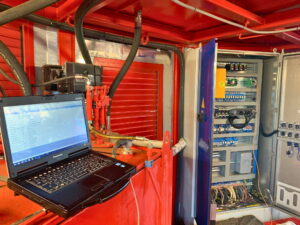 Modern telescopic cranes use the CAN-bus protocol for communication between sensors and the central unit. Consequently, crane LMI diagnostics today rely on reading digital error codes that make fault identification much more immediate.
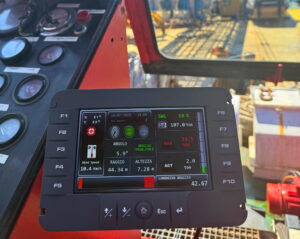
For instance, in COBO 3B6 systems, the display acts as an advanced diagnostic interface, providing specific error codes that precisely locate the failing component.
An effective load limiter troubleshooting process inevitably starts with analyzing these system logs, allowing you to distinguish immediately between a hardware anomaly and a CAN-bus network communication error. If the code indicates a signal interruption, the problem is likely a damaged cable or an oxidized connector. Conversely, if the error concerns data consistency, a software recalibration may be required.
LMI display blank or unreadable: Repair vs. Replacement
The monitor is the only tool the operator has to monitor the “stability triangle.” Unfortunately, prolonged exposure to UV rays and moisture ingress can make crane LMI display repair very complex. If your screen shows black spots or fails to power on, you must carefully evaluate whether it is worth repairing or replacing. Often, installing a latest-generation telescopic crane LMI monitor is the wisest choice. New displays offer better visibility under direct sunlight and higher resistance to weathering, ensuring a longer lifespan than older analog models.
Maintenance and Calibration for crane LMI precision
To ensure a load limiter is reliable, it isn’t enough for it to be on; it must be precise. A small discrepancy in sensor readings can result in a dangerous error in load moment calculation. For this reason, regular maintenance and component calibration are essential activities for every fleet.
Troubleshooting hydraulic crane pressure sensors
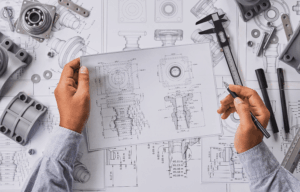 A hydraulic crane pressure sensor problem is one of the most frequent causes of incorrect readings. These transducers read the pressure in the lift cylinders to determine the load weight. However, wear or pressure spikes can damage internal membranes.
If you notice the weight on the display oscillating or not matching the actual load, immediate intervention is vital. In many cases, replacement with high-quality components resolves system instability and restores operational safety.
Angle transducer and boom extension sensor calibration
Beyond weight, the crane LMI system must know the exact geometry of the machine. This is where crane angle transducer calibration and crane boom extension sensor checks come into play. If these two values are not perfectly synchronized, the computer cannot calculate the correct working radius. Calibration must be performed every time a critical component is replaced or after structural work on the boom.
Guided kits and procedures can make calibration a fast process, preventing the machine from sitting in the workshop for weeks.
Predictive maintenance for crane LMI systems: prevention is better than repair
The most effective strategy for managing a fleet remains predictive maintenance for crane LMI systems. Instead of waiting for a breakdown on-site, it is preferable to monitor sensor health during scheduled downtime. Implementing a periodic check-up plan not only increases safety but drastically reduces emergency repair costs.
Key regular checks include:
-
Cable integrity in the cable reel to avoid signal interruptions.
-
Connector cleaning to prevent oxidation and false electrical contacts.
-
Transducer signal verification to detect electronic drift before a lockout occurs. Investing in prevention ultimately protects the residual value of your machine and ensures continuity on the job site.
Modernization and Revamping: giving new life to your cranes
Electronic crane revamping: transforming analog to digital
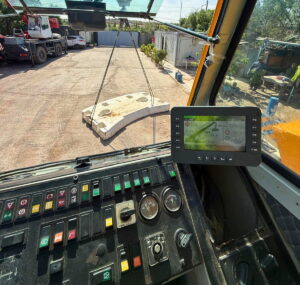 Switching to modern systems without replacing the “iron” allows you to regain efficiency and precision. A crane revamping intervention radically transforms the operator experience, bringing it up to current technological standards. In many cases, a targeted retrofit is the fastest way to integrate new control functions without overhauling the crane’s mechanical structure.
Key advantages include:
-
Superior Reliability: Eliminating old wiring prone to false contacts.
-
Calculation Precision: Updated software for flawless load moment management.
-
Modern Interface: High-resolution color displays that simplify the operator’s work.
Modernizing weighing and load limitation systems
Crane weighing system modernization involves both software and advanced hardware integration. Replacing old transducers with new crane boom load cells ensures consistent readings even in extreme weather conditions. This upgrade results in a more responsive machine that is less prone to unjustified lockouts due to unstable signals.
Safety upgrade kits for earthmoving and lifting machinery
Complying with current regulations is a legal obligation and a guarantee of protection against legal risks. Thanks to safety upgrade kits like the 3Bmust Retrofit line, even compact machines can be adapted to the latest directives (such as EN 13000).
Technological adaptation is fundamental to avoid heavy fines during site inspections or, worse, civil and criminal liability in the event of an accident. These packages feature “all-in-one” miniaturized electronics that facilitate installation in tight spaces, minimizing downtime and ensuring full LMI system compliance even on older cranes.
Support and Spare parts: 3Bmust support for Crane LMI Systems
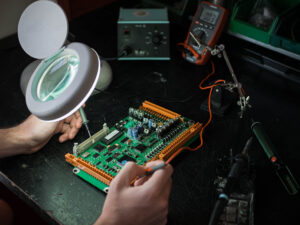 Beyond the supply: your partner on the job site.
The 3Bmust mission doesn’t end with the sale: we know that every minute of downtime heavily impacts your productivity.
That’s why we offer timely after-sales support and a dedicated service network designed to resolve emergencies and get your crane moving again as quickly as possible.
Remote technical support for crane repair
In an increasingly connected world, remote crane technical support has become an indispensable service. Through advanced communication modules, our technicians can connect to 3Bmust safety system components directly from our headquarters. This approach allows us to:
-
Diagnose faults in real-time without waiting for a technician to arrive on-site.
-
Reduce travel costs by intervening surgically only where necessary.
-
Guide the operator through reset procedures or minor maintenance.
Original spare parts and LMI systems: the 3Bmust ecosystem
The speed of recovery depends on part availability. 3Bmust guarantees a fully stocked warehouse of COBO 3B6 spare parts and original components, ensuring fast shipping for sensors, transducers, and monitors.
For those seeking a quality leap, our crane load limiters offer high safety standards (PL=c) and maximum flexibility. With rapid on-screen calibration and telemetry readiness, we turn maintenance into a competitive advantage, reducing downtime and ensuring full EN 13000 compliance.
Do you need technical advice or an urgent spare part? Contact our 3Bmust experts today!


No comment yet, add your voice below!